How to track your cycle the right way
A modern guide to cycle literacy, tracking bleeding vs spotting, basal body temperature, and cervical fluid patterns.
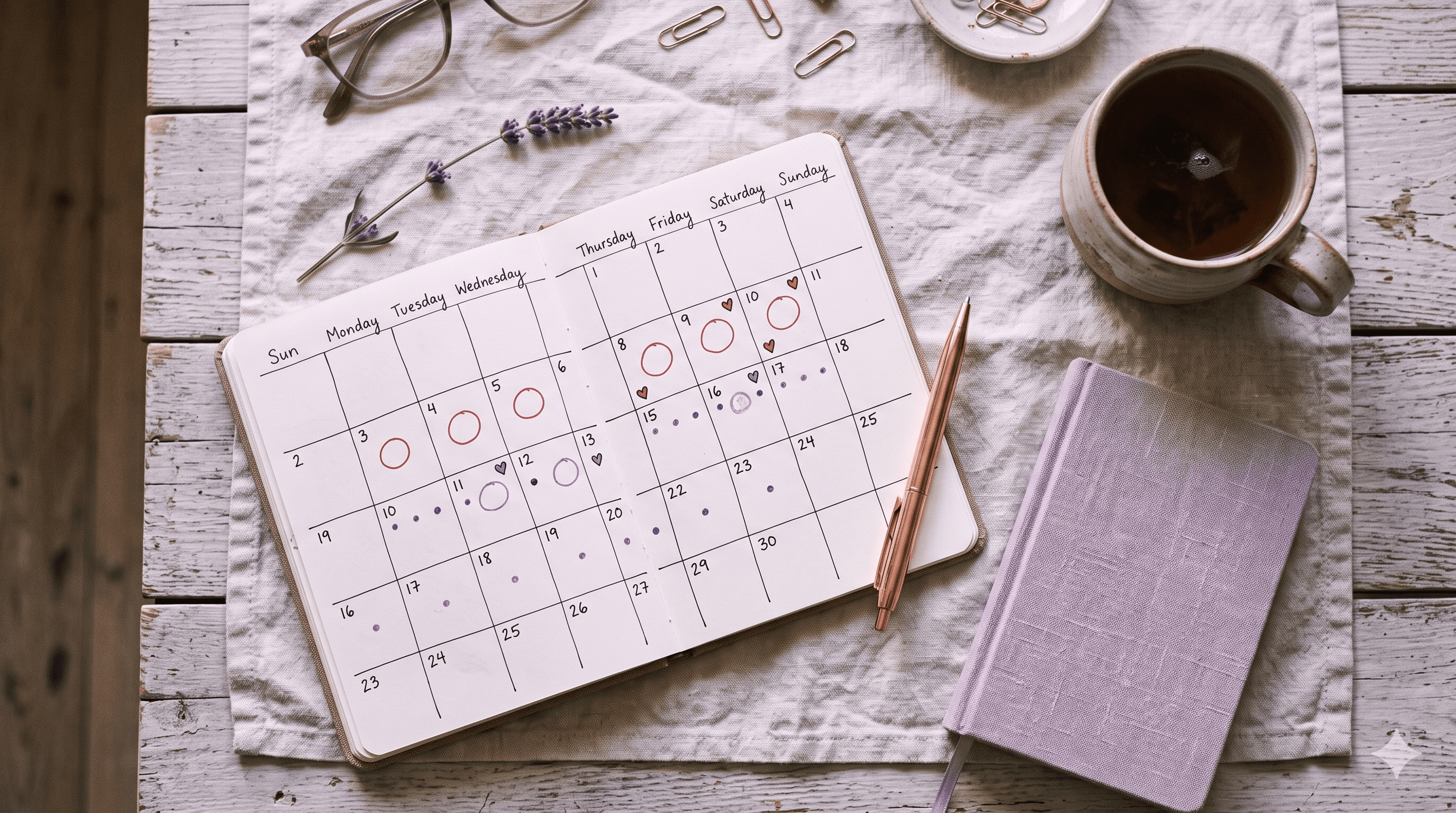
At a Glance: Quick Summary & Key Takeaways
Cycle tracking is not just for trying to conceive; your menstrual cycle is a monthly report card on your endocrine, metabolic, and emotional health. Learn how to track biological indicators with precision.
- Day 1 of your cycle is the first day of true red, active flow requiring menstrual products (not brown spotting).
- A normal cycle ranges between 24 and 35 days; cycle-to-cycle variation should ideally remain within 7 to 9 days.
- Record qualitative markers: cervical fluid texture, breast tenderness, libido shifts, and digestive changes.
- Use privacy-first tracking apps that allow manual symptom input without enforcing rigid 28-day assumptions.
The Golden Rule: What Counts as Day 1?
Many women incorrectly mark light brown pre-menstrual spotting as Day 1 of their cycle, skewing their calculations.
Day 1 is formally defined as the first day of bright red, full menstrual flow before 5:00 PM (if flow starts late at night, the next day is considered Day 1).
Pre-menstrual brown spotting is often a sign of an early progesterone dip. Tracking spotting separately from active flow provides your doctor with critical insight into luteal phase health.
The Four Phases of the Female Cycle
1. Menstrual Phase (Days 1–5)
Estrogen and progesterone are low. The body is shedding the endometrium. Energy is naturally lower; focus on warm, iron-rich, restorative foods.
2. Follicular Phase (Days 6–13)
FSH stimulates follicle growth. Rising estrogen boosts energy, cognitive clarity, insulin sensitivity, and social confidence.
3. Ovulatory Phase (Days 14–16)
Estrogen peaks, triggering the LH surge. Cervical fluid is slippery and clear. Libido and physical strength reach their monthly zenith.
4. Luteal Phase (Days 17–28+)
Progesterone dominates. Basal body temperature rises. Metabolism increases slightly (+100–250 kcal/day). Prioritize complex carbs, magnesium, and restorative sleep.
Clinical Protocol: Recommended vs. What to Avoid
- Document flow characteristics (light, medium, heavy, presence of clots).
- Log your mood and mental state across all four phases to recognize hormonal patterns.
- Don't rely on predictive algorithms that auto-fill your fertile window based on national averages.
When to Consult a Physician or Specialist
While lifestyle and nutritional adjustments are powerful, seek immediate professional medical attention if:
- Your cycle is consistently shorter than 21 days or longer than 35 days.
- You bleed between cycles or after sexual intercourse.
Frequently Asked Questions
If your cycles fluctuate unpredictably (e.g., 32 days, then 55 days, then 40 days), you are likely experiencing an extended, delayed follicular phase. Tracking cervical mucus and BBT will reveal when your body is actually attempting to ovulate.
Scientific References & Clinical Guidelines
- American College of Obstetricians and Gynecologists. (2015). Menstruation in girls and adolescents: using the menstrual cycle as a vital sign. Committee Opinion No. 651.
Need direct guidance for your cycle & symptoms?
Our multidisciplinary clinical care team of reproductive endocrinologists, gynecologists, and clinical dietitians builds a tailored metabolic protocol just for you.
Related Evidence-Based Articles
Irregular periods, explained
Why your cycle changes and when it is time to speak to a doctor.

How to track your symptoms daily
A simple routine to log symptoms and spot patterns over time.
Ovulation tracking, step by step
Ways to find your fertile window even with irregular cycles.

Building a hormone-friendly morning
A calm, realistic routine to start your day on the right foot.